

Ebikes have been in the news quite a bit lately and for all the wrong reasons. There are some big problems with the illegal ones but there’s also a lot of misinformation and unsubstantiated conclusions about the good, legal ones and ebikes more generally being put out there so I’m going to take a peek at what ebikes actually are, what they are not and why not all ebikes are created equal.
So, what is an ebike? The answer is probably already obvious to many but, at base, it’s a bicycle fitted with some kind of electric motor and battery setup to alleviate some degree of the effort required to pedal the bike and keep it moving forward. This kind of device has proven immensely popular for good reasons. They’re extremely cheap to run, hugely fun to get around on and can be used on bikeways thus avoiding busy roads.
But there are problems with all this which can be boiled down to the following: humans being the way we are, our ability to moderate ourselves is inherently poor to say the least. Once we think we’re onto a good thing, more always seems better and with the invention of the modern ebike, it’s been no different. We have continued to add more power to ebikes and more ability for them to do greater and greater speeds as technological developments have allowed and now some ebikes are pretty much indistinguishable from motorcycles. I’ve written previously about the heritage of the motorcycle – particularly the lineage it shares with the bicycle – and a modern version of that evolution seems to have happened again with some types of ebikes today.
If you don’t need to pedal, it’s a motorcycle
Here’s a very quick, rough and high level history of the ebike in Australia. Somewhere in the mid noughts, what we recognise as modern ebikes began to slowly trickle into bike shops in Australia. They were unreliable, generally quite poorly made, had a short range and weren’t great value for money. Needless to say, they weren’t terribly popular.
Another thing that they pretty much all shared in common was that power to the motor was actuated by some kind of hand throttle. Technically, pedalling was optional but in reality if you didn’t help the bike by pedalling at least a bit, you were going to be noticeably limiting how far and how fast you went.
As the years went on though, battery and motor technology improved vastly which meant more power and range and less reliance on the bikes’ pedals. Ebikes were beginning to morph into something other than just a bicycle with a bit of assistance.
Technological improvements were not just in the area of batteries and motors though at that time. In Japan, the torque sensor had also been evolving since the 1990s and was now ready for larger scale commercial implementation. For those unfamiliar, a torque sensor is an electronic gadget that measures how much effort your legs are applying to the pedals. They’re usually incorporated into mid-drive ebike motors (the type of motor that sits near a bike’s cranks) and the data the sensor produces is used to inform the bike’s motor how much assistance the rider might need based on the effort they’re putting in.
And this is where ebikes began to diverge into what I consider to be two distinct lineages. The throttle ebikes were heading down the path of looking and performing more like motorcycles – these are the problem ones that are now targeted by law enforcement. They are now way overpowered to be considered bicycles but because their evolution happened over a long period they just kind of slipped under the radar of the regulators as they became incrementally more and more powerful. Here’s what BQ has to say on overpowered ebikes. (BTW, I have nothing against motorcycles but we need to make a distinction between what a motorcycle is versus an ebike).
They’re not all motorcycles and they’re not all dangerous
The other lineage is the pedal assisted, EN15194 compliant ebikes which use torque sensors to actuate power to the bike and which have largely evolved with European standards to create ebikes which are speed limited to 25km/h (ie the motor cuts out at 25km/h but you’re free to pedal or roll faster than that if you’re able). They are largely about providing the rider with extra torque to help get up hills and carry loads rather than increasing the speed at which the bike can travel. So, effectively the pedal assisted bikes are just bicycles that travel at bicycle speed but are just a bit better at getting up hills.
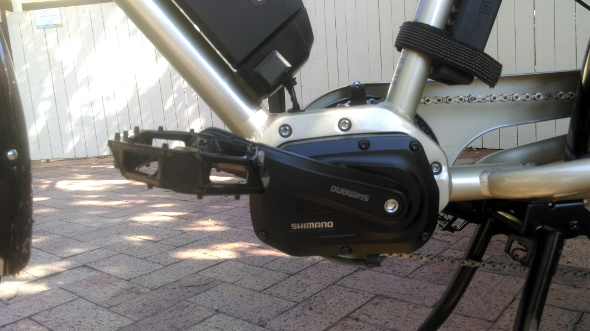
…[legal ebikes] are speed limited to 25km/h and are largely about providing the rider with extra torque to help get up hills and carry loads rather than increasing the speed at which the bike can travel…
The development of the pedal assisted type ebike motors and batteries has also been taken up by large, well known companies like Bosch, Shimano, Yamaha and DJI who produce high quality units that are extremely reliable, carry much better warranties and are significantly less prone to catching fire than their cheaper, poorly made cousins. The good quality pedal assist motors and batteries are then paired to good quality bikes with solid components which are sold by reputable dealers to produce reliable, useful ebikes that can realistically supplement or replace your car usage thus saving you money and improving your health.
Don’t bring road chaos to the bikeways
As I’ve mentioned previously, if done correctly the network of a city’s bikeways forms an alternative and much improved facet of that city – a civilized, low speed, high utility mesh that provides a different vantage from which to observe that city and travel through it. They’re a low stress alternative by which a person can travel regardless of age and open to various abilities and various active transport devices. Bikeways are essentially transport Nirvana almost completely free from traffic jams, road rage and deadly carnage that happens regularly on roads (granted, there are some isolated incidents on bikeways but they’re so infrequent that they’re statistically insignificant and usually much less impactful that road crashes).
Coming back to the topic of ebikes, I think the last thing most people want is to turn the transport Nirvana of bikeways into a replication of what happens on our roads with cars. Unfortunately, with the direction that illegal ebikes have evolved recently, by continuing to allow them to be ridden unfettered on our bikeways we head away from transport Nirvana and towards some new and equally ugly version of the way car traffic behaves.
Vultures are opportunistic
Whilst the negative media coverage that illegal ebikes receive is mostly warranted, many media stories tend to conflate illegal ebikes with the legal ones. They focus on the negative aspects of illegal ebikes while completely omitting the distinction between the two types and failing to point out any of the benefits of the legal ebikes.
Whether that wrongful coverage is a deliberate attempt to put into disrepute the use of all ebikes and maybe, by extension, the use of all active transport, or a commercial decision that a news story along the lines of “all ebikes are bad” will make more sales than a more balanced story or if it’s simply a product of ignorance, I’m not really sure.
What I’m saying is that the media blurring the lines about which ebikes are a problem is real and it needs to stop. It’s also something to keep in mind if you find yourself in a discussion on the topic because the person you’re speaking to may already have internalised some of the media’s falsehoods about ebikes.
Good, legal ebikes make the future of personal transport bright
As mentioned a quality, legal ebike, especially a cargo bike, can replace or significantly reduce reliance on a car which provides a host of benefits to the ebike user such as better health and financial benefits and also to the broader community by reducing air pollution and CO2, reducing traffic congestion and alleviating pressure on public parking to name a few.
With the federal government adopting the European EN15194 to apply to the import of ebikes, the number of illegal, overpowered ebikes should drop significantly restoring bikeways and the general state of ebiking back to where it should be which is as a safe, low speed and highly functional mode of transport.
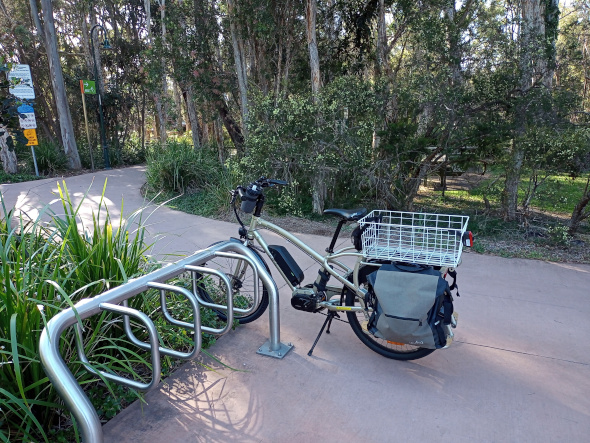
So, if you’re even a little bit ebike curious and haven’t already tried one, the time is now. As far as legal, reputable ebikes go the technology is solid, the quality is high and the safety factor has just improved a lot. Ignore the media clickbait and naysaying – there’s probably vested interests involved anyway. Try an eMTB, an eCargo bike or a eCommuter. I don’t know anybody who has bought a quality ebike and decided they didn’t like ebikes afterwards. Make it your daily driver or use it as a supplement to your regular pedal bike – the world is your oyster.
Here is a list of good Brisbane ebike retailers I know of to start your consideration:
- Electric Bikes Brisbane
- Epic Cycles
- Dutch Cargo Bikes
- Earthcycles
- Everybody Ebikes
- 99Bikes and some stores also stock cargo bikes.
Ride safe and see you out there sometime.